The Last Post in this Blog
While we're all doing the same work to bring you the latest information, this blog has moved to a new platform. So if you'd like to continue to receive RSS feeds or email alerts, would you re-subscribe in the new format.
http://busibook.wordpress.com/
Let us know what you think of the new format
Thursday, 8 April 2010
Wednesday, 31 March 2010
Failure to advance: resource logic for early venture failure (journal article)
by M.K.Saxton et al.
from Prometheus, Vol 28 No 1 March 2010, pp. 15-27
"New ventures play an important role in economic growth. The resource logic underlying how these firms develop in the early stages, however, has not received adequate attention in the literature. This paper examines the launch trajectories of embryonic ventures. We propose a configurational model of these trajectories based on the resources and stages required to establish a viable commercial entity. Potential launching paths are identified, from the inception of a new product/service idea through to success outcomes, including rapid, independent sales growth, stabilized profit, acquisition or Initial Public Offering. We argue that embryonic firms must balance the development of product, financial and human resources through waves of resource accumulation as they move through different stages of development. We summarize our arguments in a model of venture evolution. "

Australia 2010 : towards a seamless national economy [online]
Authors: Organisation for Economic Co-operation and Development (OECD)
Authors: Organisation for Economic Co-operation and Development (OECD)
"Presents a general picture, set within a macroeconomic context, of regulatory achievements and challenges, including regulatory quality at the Commonwealth level as well as across levels of government, competition policy and market openness. It also provides a special focus on Commonwealth-state relationships." - abstract.
Tuesday, 30 March 2010

Authors: William Wells & others
Australian textbook covering topics including: advertising's role in marketing, strategic research for advertising, interactive and digital media, and not-for-profit advertising and public relations.
Australian textbook covering topics including: advertising's role in marketing, strategic research for advertising, interactive and digital media, and not-for-profit advertising and public relations.
Call number: 659.10994 ADV 2008
Click here, and request a copy from the library!
Click here, and request a copy from the library!
Monday, 29 March 2010
 Pigs at the trough : lessons from Australia's decade of corporate greed [book]
Author: Adam Schwab
"The past decade has seen a period of unparalleled growth in executive remuneration. But while CEO pay exploded, shareholders looked on helplessly as some of Australia's best-known companies self-destructed. When the fall eventually came, executives were well protected. Shareholders and creditors were not so lucky.
From Telstra's enriching of Sol Trujillo to the toppling of Eddy Groves's ABC Learning Centres and the untold accounts of the billions lost by the collapsed Babcock & Brown, Allco Finance Group and MFS, Pigs at the Trough tells the story of how a generation of executives, under the supervision of well-known and respected non-executive directors, pushed all the boundaries and sometimes sailed right over them ... and got away with it." - from publisher.
From Telstra's enriching of Sol Trujillo to the toppling of Eddy Groves's ABC Learning Centres and the untold accounts of the billions lost by the collapsed Babcock & Brown, Allco Finance Group and MFS, Pigs at the Trough tells the story of how a generation of executives, under the supervision of well-known and respected non-executive directors, pushed all the boundaries and sometimes sailed right over them ... and got away with it." - from publisher.
Call number: 338.5420994 PIG 2010
Click here, and request a copy from the library!
Click here, and request a copy from the library!
Thursday, 25 March 2010

Author: Mary Morel
"How to write effective senior management reports and board papers that get to the point in plain language. Covers every aspect of the writing process - planning, writing and proofreading. Includes advice on templates, using graphs and tables, and how to create a successful PowerPoint presentation." - cover.
Find it at: 658.453 WRI 2009 or
Click here, and request a copy from the library!
Click here, and request a copy from the library!
Wednesday, 24 March 2010

Author: Richard N. Bolles
Covers: The five best ways to hunt for a job, How to deal with handicaps, Creating a resume, How to prepare for an interview, Salary negotiation, How to choose a new career, and How to find a job if you're a baby boomer.
Find it at: 650.14 WHA 2009 or
Click here, and request a copy from the library!
Click here, and request a copy from the library!
Friday, 19 March 2010

OECD tourism trends and policies 2010 [online]
Author: Organisation for Economic Co-operation and Development (OECD)
Author: Organisation for Economic Co-operation and Development (OECD)
"The tourism sector, a vital driver of job-creation and growth, is under pressure. Facing an increasingly competitive landscape, tourism in many OECD countries has started to lag, in both growth rate and productivity. This book defines the major trends and challenges facing tourism in the next decade – from globalisation to environmental issues. To address these challenges, the book then provides specific policy guidance and recommendations for making tourism more competitive and environmentally sustainable. Tourism data from 42 countries are presented and analysed including all OECD countries, and fast-growing tourism centres such as Brazil, Chile, China and India."
Thursday, 18 March 2010

Authors: John and Doris Naisbitt
"Reveals that China is not only undergoing fundamental changes but also creating an entirely new social and economic model—what the Naisbitts call a "vertical democracy"—that is changing the rules of global trade and challenging Western democracy as the only acceptable form of governing. The Naisbitts have identified 8 pillars as the foundation and drivers of China's new society:
Emancipation of the Mind
Balancing Top-Down and Bottom-Up
Framing the Forest and Letting the Trees Grow
Crossing the River by Feeling the Stones
Artistic and Intellectual Ferment
Joining the World
Freedom and Fairness
From Olympic Medals to Nobel Prizes"
Find it at: 330.951 CHI 2010 or
Click here, and request a copy from the library!
Click here, and request a copy from the library!
The use of film in re-imaging a tourism destination: a case study of Yorkshire, UK. (journal article)
by Noelle O'Connor, Sheila Flanagan and David Gilbert
from Journal of Vacation Marketing, Vol 16 No 1 January 2010, pp. 61-74
"The primary focus of this article is to provide a theoretical insight into the relationship between film induced tourism and destination imagery, which in turn can be used to market a tourism destination. In order to achieve this, strategic conversations were carried out with the key stakeholders behind the development of the Yorkshire (UK) brand. Yorkshire will be used as the lens through which the film induced tourism phenomenon will be observed as it is the film location for many popular English television series. In addition, this article draws upon the literature background and the theoretical context of the film induced tourism phenomenon in relation to destination imagery. The issues which emerged from these and the literature review highlighted many implications for the future development of these locations such as the use of destination imagery in the promotion of a film location."
Contact us for a copy of this article
Wednesday, 17 March 2010
The World's Most Admired Companies (journal article)
by Anna Bernasek
from Fortune, Vol 161 No 4, 22 March 2010
"The article identifies the 50 most-admired companies according to a survey of business executives, directors, and analysts. Though such admiration can be of vague origin, the article indicates that trust and integrity were important factors in 2009. Such qualities are said to be durable corporate assets that underlie competitive advantage and financial gains. The article discusses specific companies that ranked highest in the survey including Apple in the number 1 spot, Google Inc., and eBay. A list of all 50 companies is provided."
Avoiding micromanagement: how to help team members excel - on their own (journal article)
from MindTools
from Proctor, Vol 29 No 11 December 2009
"Whether you're a miocromanager or micromanaged, there are strategies and techniques that can change this undesirable business practice."

Author: Ian Gambles
A good business case is so much more than simply the means to justify a decision. A well-written and well-researched business case will secure funding; make sure any project stays on the right side of regulation; mobilize support for the cause; provide the platform for managing the project and the benchmark against which to measure progress.
Ian Gambles' Making the Business Case shows you how to make sense of the task at hand, develop a strategy, articulate your options, define the benefits, establish the costs, identify the risks and make a compelling case.
Ian Gambles' Making the Business Case shows you how to make sense of the task at hand, develop a strategy, articulate your options, define the benefits, establish the costs, identify the risks and make a compelling case.
Find it at: 658.404 MAK 2009 or
Click here, and request a copy from the library!
Click here, and request a copy from the library!
How to thrive in turbulent markets (journal article)
by Donald Sull
from Harvard Business Review, Vol 87 No 2, February 2009 pp. 78-88
"Competing in volatile markets feels a lot like boxing: punches come from all directions; strategies change constantly; and one powerful blow could knock out your company at any moment. As firms fight their way through tumultuous times, they can learn much from boxing champions. London Business School professor Donald Sull outlines two fundamental approaches to mastering uncertainty--agility and absorption--using the classic "Rumble in the Jungle" between Muhammad Ali and George Foreman to illustrate them. "
Tuesday, 16 March 2010

Author: SEGRA (Sustainable Economic Growth for Regional Australia)
Papers presented include: Climate Change and the Green Revolution: what's in it for regional Australia -- Emissions Trading: an economic business perspective -- Sustainable Mining Futures and the Liveability of Mining Villages -- Delivering and Supporting Indigenous Participation in Regional Development -- Townsville: a regional development case study -- Infrastructure Australia and Smart Sustainable Regions.
Find it at: CD ROM SEG or
Click here, and request a copy from the library!
Click here, and request a copy from the library!
Monday, 15 March 2010
Five myths about how to create jobs (journal article)
By James Manyika and Byron Auguste
from McKinsey Quarterly Feb 2010
"With unemployment hovering just below 10 percent, job creation is now priority number one in Washington. But America’s jobs challenge is a marathon, not a sprint."
Contact the Library for a copy of this article.

Author: Mireille Guiliano
This is a book about life, how to make the most of it, how to find your balance when you are working long days and trying to be happy and fulfilled. Mireille Guiliano has written the kind of book she wishes she had been given when starting out in the business world and had at hand along the way. She draws on her own experiences at the forefront of women in business to offer lessons, stories, helpful hints - and even recipes! - that can make the working world a happier and more satisfying part of a well-balanced life.
This is a book about life, how to make the most of it, how to find your balance when you are working long days and trying to be happy and fulfilled. Mireille Guiliano has written the kind of book she wishes she had been given when starting out in the business world and had at hand along the way. She draws on her own experiences at the forefront of women in business to offer lessons, stories, helpful hints - and even recipes! - that can make the working world a happier and more satisfying part of a well-balanced life.
Mireille talks about style, communication skills, risk taking, leadership, etiquette, mentoring, personal relationships and much more, all from a perspective of three decades in business. This book is about helping women (and a few men, peut-etre) feel good about themselves, being challenged and engaged in our working lives, and always looking for pleasure in every single day.
Find it at: 650.1082 WOM 2009 or
Click here, and request a copy from the library!
Click here, and request a copy from the library!
Thursday, 11 March 2010
Professional Services set to lead the pack (special report)
Source: IBISWorld
"The past year has seen the professional service sector – spanning accounting, architecture, law, engineering and management consulting – navigate a tumultuous and rocky road. Business sentiment fell rapidly in 2009, leading to excess spending being cut from tightening budgets and any service not viewed as mandatory placed at risk of removal. In this article just published in PSF Journal, IBISWorld outlines which professional services are expected to post the strongest recovery in 2010 and why."

Authors: Ken Blanchard & others.
Everyday, organisations around the world launch change initiatives - often big, expensive ones - designed to improve the status quo. Yet 50 to 70% of these change efforts fail. So who or what is killing change? The authors share a detective-style parable that offers insight into how resistance to change is compromising the implementation of positive agendas.
Find it at: 658.406 WHO 2009 or
Click here, and request to borrow a copy from the library!
Click here, and request to borrow a copy from the library!
Wednesday, 10 March 2010
Where the US will find growth and jobs (journal article)
from McKinsey Quarterly Mar 2010
"Policy makers everywhere should focus on the competitiveness of individual sectors."
Contact the Library for a copy of this article.
Building organizational capabilities: McKinsey Global Survey results (journal article)
from McKinsey Quarterly Mar 2010
"Building organizational capabilities, such as leadership development or lean operations, is a top priority for most companies. However, many of them have not yet figured out how to do so effectively. The odds improve at companies where senior leaders are more involved."
Contact the Library for a copy of this article.
Forecasting health futures and health costs (journal article)
by Philip Davies
from ATSE Focus, March 2010
"So, 50 years into the future, there are good grounds to question the need for the conventional hospital, as we know it. Remember, we are talking 50 years into the future here. The other group that I think may be vulnerable are our traditional primary care practitioners or GPs. As we move into a world where healthcare becomes more technologically dependent and multi-disciplinary, will the small business model of General Practice be viable? Paradoxically the same technologies that may call the business model of the hospital into question could also challenge the business model of general practice.Looking at the future of healthcare provision, I wonder whether the hospitals and the primary care providers will actually merge and collapse into some new sort of high-tech connected clinic that we can access remotely and that provides the hub for delivering community-based services.What we spend on healthcare is actually the result of individual choice plus societal views. We live in a democracy and we are not necessarily slaves to demography. We have the power of democracy to help us make decisions about how much we are going to spend on healthcare. Healthcare expenditure is not out of control. We control healthcare expenditure as individuals or as a society. We have to make those decisions. "
Data data everywhere (journal article)
from The Economist, Vol 394 No 8671, 27 Feb 2010, pp. 3-5
"The article discusses information resources and information resources management. Digitalization has enormously increased the amount of data that can be stored and distributed, which offers opportunities for businesses, governments, and scientific research. However, the amount of computer storage space for the data is growing limited. Privacy protection and data security become more difficult as the amount of information available expands."

Getting to resolution : turning conflict into collaboration [book]
Author: Stewart Levine
Author: Stewart Levine
Tuesday, 9 March 2010

Author: William Bridges
"The classic guide to dealing with the human side of organizational change. It includes a new introduction and provides step-by-step strategies for minimizing the disruptions caused by workplace change.
Managing Transitions addresses the fact that it is people who have to embrace a new situation and carry out the corresponding change. The good news is that while the changes we are facing differ from any we’ve experienced before, the transition process by which people get through change does not alter and is outlined in this book. It helps you understand what is happening and navigate the transitions successfully.Whenever an organization makes a change, its people first have to deal with an ending; then with a time in between the old and the new that Bridges calls the “neutral zone”; and then with a new beginning." - publisher's website.
Find it at: 658.406 MAN 2009 or
Click here, and request a copy from the library!
Click here, and request a copy from the library!
Monday, 8 March 2010
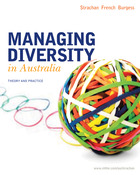
Authors: Glenda Strachan, Erica French, John Burgess
Managing Diversity in Australia is an important new title based on original research by leading scholars in the field. The book was specifically created to address the need for critical coverage of managing diversity and equity policies and programs in Australian organisations.
This new book covers the complex theoretical issues and provides practical examples of organisational practice. The work incorporates a range of clearly written Australian case studies into diversity issues.
Want to read this book? See is at: 658.3008 MAN 2009 or
This new book covers the complex theoretical issues and provides practical examples of organisational practice. The work incorporates a range of clearly written Australian case studies into diversity issues.
Want to read this book? See is at: 658.3008 MAN 2009 or
Friday, 5 March 2010

Author: Mark Goulston
"Discover field-tested, powerful techniques for getting people to do what you want them to do ... Learn how to: Get the attention of a total stranger who you need to know, Talk an angry person from an irrational state to receptivity, Use the "Magic Paradox" to turn a negative person into an asset, [and] Master the critical art of buy-in (the foreplay of negotiation, persuasion, and selling)." - cover.
Find it at: 658.45 JUS 2010 or
Click here, and email your request for a loan to the library!
Click here, and email your request for a loan to the library!
Thursday, 4 March 2010

Author: Robert Baxt
Chapters include: The duties of directors : a broad overview -- The fundamental duties of directors : duty to act -- The fundamental duties of directors : duty to act with care and diligence -- Day-to-day duties -- Insolvent trading -- Insurance, forgiveness by shareholders and by the courts -- Remedies for shareholders : common (general) law and statutory -- Traps for the unwary director.
Find it at: 346.9406642 DUT 2009 or
Click here, and request a copy from the library!
Click here, and request a copy from the library!
Wednesday, 3 March 2010
Harnessing Your Staff's Informal Networks (journal article)
By Richard McDermott and Douglas Archibald
from Harvard Business Review Vol. 88 Issue 2 Mar 2010, pp. 82-89
"The article discusses the integration of employees' informal social networks into the organization's formal management practices. The advantages of having communities of practice share information and collaborate on innovation or problem solving are noted. Research that was conducted by Warwick Business School's Knowledge and Innovation Network and financed by Schlumberger company and the Warwick Innovative Manufacturing Research Centre is discussed. The development of global communities of practice at the construction and engineering company Fluor is mentioned. Four principles related to the communities' effectiveness are discussed."
A Better Approach to China's Markets (journal article)
By Max Magni and Yuval Atsmon
from Harvard Business Review Vol. 88 Issue 2 Mar 2010, pp. 30-31
"The article discusses market entry strategy for international business enterprises and domestic companies in China. The idea of organizing groups of cities into market clusters that produce at least one percent of China's gross domestic product is discussed. The social and economic similarities of clustered cities that define China's markets are noted. An illustration shows the 22 basic Chinese clusters, their population data, their projected growth, and the status of consumer confidence. The clusters include Chengdu, Kunming, Nanning, Huhehaote, Jingjinji, Shanghai, and Shandong Byland."
Booming Bohemia? Evidence from the US High-Technology Industry (journal article)
By David S. Bieri
from Industry & Innovation Vol 17 Iss 1 Feb 2010, pp. 23 - 48
"This paper assesses the effect of Richard Florida's creative class on economic growth and development at two levels of spatial aggregation. First, I examine the dynamics of economic growth across US metropolitan regions and investigate how they relate to regional specialization and the concentration of talent in the high-tech industry. In addition to evidence of significant high-tech clusters, I identify important complementarities with regard to the interaction between the three Ts of regional development (talent, technology and tolerance) and regional growth dynamics. Using firm-level data, the regional analysis is then complemented by exploring the location of new high-technology plant openings and their relationship with university research and development (R&D) and the creative class. Specifically, I test the hypothesis that both university R&D and the presence of “creativity” generate spillovers which are captured locally in the form of new high-tech establishments, after controlling for important location factors such as local cost, demand and agglomeration economies. While the marginal impacts of increased R&D funding on county probability for new firm formation is modest, the mix of creativity and diversity—as proxied by the Florida measure—appears to be a key driver in the locational choice of new high-tech firms. Separate estimates indicate that these findings hold up across the major high-tech industries in the USA."
The Anatomy of the Creative City (journal article)
By Patrick Cohendet, David Grandadam and Laurent Simon
from Industry & Innovation Vol 17 Iss 1 Feb 2010, pp. 91 - 111
"The aim of this contribution is to depict and analyze the dynamics of situated creativity by presenting an anatomy of the creative city and an understanding of the emergence and formation of creative processes in these particular local ecologies of knowledge. We propose to study the anatomy of the creative city by defining three different layers—the upperground, the middleground and the underground—as the basic components of the creative processes in local innovative milieus. Each one of these layers intervenes with specific characteristics in the creative process, and enables new knowledge to transit from an informal micro-level to a formal macro-level. In order to illustrate this point of view, the creative city of Montral is analyzed through two main case studies: Ubisoft and the Cirque du Soleil. "
Taking Asia Seriously (journal article)
By Martin Griffiths
from Australian Journal of Political Science Vol 45 Iss 1 Mar 2010, pp. 13 - 28
"Australia has traditionally relied on two diplomatic strategies in its attempts to 'engage' Asia. The first has been to couch engagement diplomacy within broader global trends and developments, such as the response to the communist threat during the Cold War or the general move towards the 'new regionalism' after the Cold War. The second strategy has been a dogged prudentialism, building on shared (usually commercial) interests. The shortcomings of both strategies became apparent in the lead up to the 2005 East Asia Summit, during which Australia faced a diplomatic exclusion not as the specific policy choice of another country, but as the unintended by-product of rivalries among Asia's great powers. That the success or otherwise of Australia's regional engagement will be shaped by such rivalries in future was reinforced by the sensitivities aroused over the Prime Minister's trip to China in 2008. Perhaps the bigger lesson is that Asia's rivalries are no longer sub-sets of global dynamics. We may be entering an era in which Asia's rivalries drive broader global dynamics, which in turn will pose severe challenges for Australia's regional diplomacy."
Beyond Cricket: Australia-India Evolving Relations (journal article)
By Peter Mayer
from Australian Journal of Political Science Vol 45 Iss 1 March 2010, pp. 133 - 148
"Australia's relationship with India stands in apparent contrast with its relations elsewhere in Asia. Most accounts of Australia's links to India liken them to recurrent bouts of amnesia, arguing that Australia has not put the same efforts into engaging with India that it has into fostering ties with Japan, China and Indonesia and that, like a patient with injury to the hippocampus who has lost the ability to lay down long-term memories, Australia appears to approach each episodic moment of contact without recollection of the past. Australia's relationship with India has passed through distinct phases, from a brief moment of warmth in the years immediately after India achieved independence, through frosty decades of the Cold War. In contrast to many other accounts, the paper argues that since the 1980s Australia has sought with considerable consistency to engage with India and that the tenuousness of the relationship is primarily due to Indian indifference. Recent bilateral issues, including the supply of uranium to India and attacks on Indian students, have led to an enlargement of contacts which may signify that the engagement is at last becoming a mutual one."
An Evaluation of the Economic Approaches Used by Policy Actors towards Investment in Place-Based Partnerships in Victoria (journal article)
By Chris McDonald et al
from Australian Journal of Public Administration Vol 69 Iss 1 2010, pp. 9 - 21
"Place-based partnerships are supported by the state and include various organisations and interests within particular geographic areas. The Victorian government has established place-based partnerships to plan and coordinate resource allocation decisions to meet objectives such as economic development and social inclusion. In the literature there are positive and negative views of these partnerships. One view is that they allow regions to build competitive advantage, while another is that they are a means of pursuing a neoliberal policy agenda that seeks to reduce government protection and investment. We help clarify the tensions between positive and negative views of partnerships by examining the economic approaches used by policy actors toward place-based partnerships in Victoria. We find that policy actors combine neoclassical and institutionalist approaches to argue that partnerships generate networks that enable more efficient and equitable resource allocation within places."
Workplace Bullying Policy in the Australian Public Sector: Why Has Gender Been Ignored? (journal article)
By Jacquie Hutchinson and Joan Eveline
from Australian Journal of Public Administration Vol 69 Iss 1 2010, pp. 47 - 60
"This article examines the question of gender-neutral workplace bullying policy in the Australian context. It draws on the international workplace bullying literature and interview data gathered from policy actors located in Australian public service administrations, including managers, policy implementors and employee advocates. Our findings show that both the literature and the policy actors tend to present workplace bullying as a product of individualised behaviour, overlooking the nuances and dimensions of organisational power relations that include gender. As part of this tendency, policy actors insisted that workplace bullying be represented as gender-neutral. Our analysis reveals two key factors underpinning the defence and dissemination of workplace bullying as a gender-neutral problem: the tendency to individualistic remedies in public sector policies; and the idea among policy actors that if workplace bullying was portrayed as needing gender analysis, its current support as an important organisational issue would dissolve."
TAXES, GROWTH AND THE CURRENT ACCOUNT TICK-CURVE EFFECT (journal article)
By Creina Day and Garth Day
from Australian Economic Papers Vol 49 Iss 1 2010, pp. 13- 27
"This paper examines the dynamic and long run effects of a shift from income taxes to consumption taxes in a growing small open economy. We introduce a government sector that maintains a balanced budget and expenditure at a constant proportion of domestic income to a small open economy Swan-Solow model. Our framework provides a previously unidentified dynamic effect that is robust to endogenising the savings rate. Lowering the income tax rate promotes economic growth and has a tick-curve effect on the current account balance, characterised by instantaneous deterioration, a period of recovery and gradual convergence to an improved position in the long run."
FORECASTING AUSTRALIAN MACROECONOMIC VARIABLES USING A LARGE DATASET (journal article)
By Sarantis Tsiaplias and Chew Lian Chua
from Australian Economic Papers Vol 49 Iss 1 2010, pp. 44- 59
"This paper investigates the forecasting performance of the diffusion index approach for the Australian economy, and considers the forecasting performance of the diffusion index approach relative to composite forecasts. Weighted and unweighted factor forecasts are benchmarked against composite forecasts, and forecasts derived from individual forecasting models. The results suggest that diffusion index forecasts tend to improve on the benchmark AR forecasts. We also observe that weighted factors tend to produce better forecasts than their unweighted counterparts. We find, however, that the size of the forecasting improvement is less marked than previous research, with the diffusion index forecasts typically producing mean square errors of a similar magnitude to the VAR and BVAR approaches."
Low-Paid Employment and Unemployment Dynamics in Australia (journal article)
By Hielke Buddelmeyer, Wang-Sheng Lee and Mark Wooden
from Economic Record Vol 86 Iss 272 2010, pp. 28 - 38
"This article uses longitudinal data from the Household, Income and Labour Dynamics in Australia (or HILDA) Survey to examine the extent to which the relatively high rates of transition from low-paid employment into unemployment are the result of disadvantageous personal characteristics or are instead a function of low-paid work itself. Dynamic random effects probit models of the likelihood of unemployment are estimated. After controlling for unobserved heterogeneity and initial conditions, we find that, relative to high-paid employment, low-paid employment is associated with a higher risk of unemployment, but this effect is only significant among women. We also find only weak evidence that low-paid employment is a conduit for repeat unemployment."
Using Engel Curves to Estimate the Bias in the Australian CPI (journal article)
By Garry F Barrett and Matthew Brzozowski
from Economic Record Vol 86 Iss 272 2010, pp. 1- 14
"The Australian consumer price index (CPI) is a Laspeyres price index which is subject to a number of well-known biases. In this article we evaluate the performance of the Australian CPI as a true cost of living index by comparing CPI-deflated food Engel curves estimated with the Australian Bureau of Statistics Household Expenditure Surveys. Our findings indicate that the Australian CPI overstated the change in the general cost of living between 1975/1976 and 2003/2004 by 34 per cent. The CPI was especially inaccurate for single adults and lone mother families. In contrast, the CPI was relatively accurate in measuring the change in the cost of living for two-adult and working families."

Labour Force Statistics 2009 [online]
Author: OECD
Author: OECD
This annual edition of Labour Force Statistics provides detailed statistics on population, labour force, employment and unemployment, broken down by gender, as well as unemployment duration, employment status, employment by sector of activity and part-time employment. It also contains participation and unemployment rates by gender and detailed age groups as well as comparative tables for the main components of the labour force. Data are available for each OECD member country and for OECD-Total, Euro area and European Union. The time series presented in the publication cover 20 years for most countries. It also provides information on the sources and definitions used by member countries in the compilation of those statistics.
Tuesday, 2 March 2010

The Leadership challenge [book]
Authors: James M. Kouzes & Barry Z. Posner
"With scores of new case studies and a timeless and inspiring message, The Leadership Challenge is a "personal coach in a book," guiding readers through the Five Practices of Exemplary Leadership. When leaders understand that leadership is a relationship and they begin to engage in the Five Practices - Model the Way, Inspire a Shared Vision, Challenge the Process, Enable Others to Act, and Encourage the Heart - they are better able to embark on a lifetime of success and significance."--BOOK JACKET.
Grab a copy from the library! Call number: 658.4092 LEA 2007
Friday, 26 February 2010

OECD Economic Surveys : China [online]
Author: OECD
"Finds that China's spectacular expansion has continued in recent years, making for impressive improvements in living standards. The slowdown associated with the global financial and economic crisis was contained by massive fiscal and monetary policy stimulus, which has boosted domestic demand. This survey includes chapters on recent achievements and prospects, monetary policy, financial reforms, product market regulation and competition, inequality, the labour market, old-age security and the health care system. " - abstract.
Thursday, 25 February 2010

Author: Australia. Productivity Commission
The Commission's final recommendations constitute an integrated package of reforms that would strengthen board decision-making on executive remuneration, by reducing board 'clubbiness', removing potential for conflicts of interest and enhancing accountability for pay outcomes. Shareholders would get better information and would have more 'say on pay'.
Available at: Australia. Productivity Commission. Inquiry Report; No 49 (December 2009)
Wednesday, 24 February 2010

Best practice board reporting : handbook [Ref Standard]
Author: Standards Australia
Provides guidelines on the content, presentation and other features of information presented in board reports, so that Board members can discharge their duties in the best interest of the entity. It is directed at board members, its key stakeholders and those involved in the preparation of the reports.
Find it at: Ref Standard HB 403:2004
Tuesday, 23 February 2010
Author: Roy H. Lubit.
Many managers engage in destructive behavior that does considerable harm to their subordinates, their organization and eventually themselves. Whether they are narcissistic, unethical, rigid or aggressive, or simply depressed/anxious/burned out, working with them can be a nightmare. Moreover, they can do serious damage to their organizations by diverting energy from productive work, damaging cooperation and knowledge sharing, impairing retention of the best people, weakening morale, and making poor business decisions.
In Coping with Toxic Managers, psychiatrist and organizational consultant Dr. Roy Lubit shows you how to develop your emotional intelligence and protect yourself and your organization from the destructive impact of toxic managers.
Call number: 650.13 COP 2004
Monday, 22 February 2010
Editors: Janice Langan-Fox, Cary L. Cooper, & Richard J. Klimoski
"From personality disorders to wars over 'territory', this book chronicles and reveals the true nature of often hidden workplace problems including bullying, unethical behaviour, loss of trust, organizational deviance, cowardice, workaholism, negative humour and emotions, mismanagement, and malfunctioning performance and selection systems." - cover.
Call number: 658.3045 RES 2008
Thursday, 18 February 2010
Authors: Rob Goffee, Gareth Jones
Research shows that a handful of star performers create disproportionate amounts of value for their organizations. They aren't defined by their IQ or their academic credentials. And they aren't "free-agent" types who create value on their own. Rather, they are highly talented, extraordinary thinkers who need their organizations' commercial and financial resources to fulfill their potential.". "Leadership and change experts Rob Goffee and Gareth Jones call these invaluable individuals 'clevers'. They can be brilliant, difficult - and sometimes even dangerous. Your organization's competitiveness depends on how well you lead them, but traditional leadership strategies won't be effective. In Clever, Goffee and Jones outline a set of unconventional guidelines for setting up your clevers - and your organization - for success.
Call number: 658.4092 CLE 2009
Wednesday, 17 February 2010

Reforming capital gains tax : the myths and reality behind Australia's most misunderstood tax [book]
Author: Stephen Kirchner, Centre for Independent Studies
"Argues for further reform of capital gains tax, building on the approach taken by the Ralph reforms a decade ago. Reform options include a flat tax rate for capital gains, the abolition of minimum holding periods for concessional tax treatment, and the reinstatement of the indexation of capital gains for inflation." - page 2.
Available in journal collection @ Centre for Independent Studies (Australia). CIS Policy Monograph; No 103 (November 2009)
Tuesday, 16 February 2010

Unrealised gains : the competitive possibilities of tax reform [book]
Author: Business Council of Australia
Author: Business Council of Australia
The Business Council of Australia's final submission to the Australia's future tax system review, chaired by Dr Ken Henry.
"Calls for a tax system that maximises community wealth. Among the reforms proposed in Unrealised Gains are lower corporate tax and lower taxes on local savings, measures that support a shift in focus over time away from taxing the means of production to taxing consumption. In the tougher economic environment of the next decade, our biggest growth opportunity will come from attracting a larger share of scarce global investment capital.Lower corporate tax and lower tax on local savings will boost investment. And higher investment in turn will raise productivity, wages and living standards over the next 20 years." - publisher's website.
Call number: 336.2050994 UNR 2009
Monday, 15 February 2010

Challenges the sustainable tourism development paradigm that has come to dominate both theoretical and practical approaches to tourism development over the last two decades. It extends the sustainable tourism debate beyond the arguably managerialist 'blueprint' and destination-focused approach that continues to characterise even the most recent 'sustainability' agenda within tourism development.
Reviewing the evolution of the sustainable tourism development concept, its contemporary manifestations in academic literature and policy developments and processes, the author compares its limitations to prevailing political-economic, socio-cultural and environmental contexts.
Click here to request a copy through your library.
Call number: 338.4791 TOU 2009
Call number: 338.4791 TOU 2009
Friday, 12 February 2010
Think your boss is incompetent? You're probably right. (journal article)
By Mark Buchanan
From New Scientist, 12/19/2009, Vol. 204, Issue 2739
"The article focuses on the idea that high-level incompetence is inevitable in people who are promoted. It argues that people are promoted for performing their jobs more than expected, but when they perform their new roles, incompetence arises. The author adds that a promotion may likely regress the baseline competence of a person, including his or her morale. Details of a study on why people who get promoted become incompetent are also presented."
Venture Capital and Later Stage Private Equity, Australia, 2008-09
Source: ABS 5678.0
The survey provides details of venture capital and later stage private equity activity from venture capital and later stage private equity fund managers. The information includes in broad terms fund commitments and drawdowns by source of funds, assets and liabilities of the venture capital and later stage private equity funds, financing flows between the funds and their investors and investee companies and the stage and industry characteristics of venture capital deals undertaken during the latest financial year.
Boulevard of broken dreams : why public efforts to boost entrepreneurship and venture capital have failed--and what to do about it [book]
Author: Josh Lerner
"When has governmental sponsorship succeeded in boosting growth, and when has it fallen terribly short? Should the government be involved in such undertakings at all? Boulevard of Broken Dreams is the first extensive look at the ways governments have supported entrepreneurs and venture capitalists across decades and continents. Josh Lerner, one of the foremost experts in the field, provides valuable insights into why some public initiatives work while others are hobbled by pitfalls, and he offers suggestions for how public ventures should be implemented in the future." - cover.
Click here to request a copy through your library.
Call number: 338.04 BOU 2009
Thursday, 11 February 2010

Authors: R. P. Austin & I. M. Ramsay
Sections include: Companies and Company Law, A Company as a Corporate Entity, The Law of Corporate Governance, Corporate Liability, Corporate Finance, Corporate Control and Restructuring, and External Administration.
Call number: 346.94066 FOR 2010
Wednesday, 10 February 2010

Author: John Cassidy
Why are financial markets and housing markets so prone to bubbles? Why doesn't rising prosperity make people happier? Why do many people contribute generously to charity but fail to save for their own retirement? What is the economic answer to global warming? These questions all involve behaviour that many would regard as irrational - and market outcomes that are far from ideal.
Standard economics has been dominated by rational choice models, which regard the free market as a giant super-computer that magically coordinates the activities of consumers and firms, to the benefit of all. Using fascinating new insights from behavioural economics, and vivid contemporary and historical examples, Cassidy shows how people's myopia, gullibility, copycat behaviour, overconfidence, loss aversion, and sense of altruism and fairness all help us understand the world in ways that rational choice economics does not.
This is the book that both explains the current moment and explains past and future such moments. We will continue to get things wrong. But at least now we will be having the right conversation.
Call number: 330.01 HOW 2009
Tuesday, 9 February 2010
Editors: Tony Ciro, Bruno Mascitelli, Siva Muthaly
"Re-examines the importance of international trade and globalisation to the Australian economy. In 2008-2009 the world witnessed a spectacular collapse of confidence in financial markets. Many thought that the world would re-enter into a Great Depression. Fearing the worst, governments, central bankers and policy makers devised stimulus measures designed to increase consumer spending and industrial production." - cover.
Call number: 337.94 AUS 2009
Monday, 8 February 2010

Winning and losing in business [audio CD]
Author: Michael Schildberger / Business Essentials
Introduction -- Economic update -- Winning and losing in business -- Marketing : think differently -- Where the property market is heading -- Convincing customers to buy -- Tax update -- Survey reveals poor cash flow tracking -- Sharemarket update -- Workplace stress : friend or foe?
Find it at: AUDIO CD WIN or
Click here, and request a copy from the library!
Click here, and request a copy from the library!
Thursday, 4 February 2010

Author: P.J. O'Rourke
In the 25th John Bonython lecture, PJ O’Rourke presents his view of the economic and financial crisis that is shaking the world. In a tour de force from Adam Smith to Bulgarian blue jeans, from Chicken Little to Barack Obama, O’Rourke solves the problems of our time. What is still puzzling to the world’s leaders becomes clear when seen through the eyes of America’s leading satirist.
PJ O’Rourke’s answer to a decline in the value of speculative assets? To pay less for them. And what should be done about the recession? Nothing. Because the cure is worse than the disease.
Find it in the journal collection, at Centre for Independent Studies (Australia). CIS Occasional Paper; No 115 (December 2009) or
Click here, and request a copy from the library!
Click here, and request a copy from the library!
Wednesday, 3 February 2010
Coaching for better results: key practices of high performance leaders (journal article)
By Clinton O. Longenecker
from Industrial and Commercial Training Vol 42 Iss 1 2010, pp. 32- 40
"The purpose of this paper is to explore the issue of workplace coaching and offers insight into the various coaching practices that are necessary to produce better employee performance and results."
Role of HR in the new world of sustainability (journal article)
By Isabel Rimanoczy and Tony Pearson
from Industrial and Commercial Training Vol 42 Iss 1 2010, pp. 11- 17
"The purpose of the paper is to assess the strategic role that the human resource department (HRD) can play in the development and implementation of an organization's sustainability program. "
Five reasons why 100% pure is so successful (journal article)
from NZ Marketing Magazine, 01/09/2009, pp. 22-28
"The article presents five reasons why the 100% Pure marketing campaign of Tourism New Zealand (TNZ) is successful. It is stated that the brand has consistency, with the format, logo, message and imagery being the same since the beginning. It is noted that the campaign has authenticity as TNZ has put effort in improving the quality of tourism operators. The author shares that TNZ focused on key markets such as Europe, the U.S. and Japan and identified one type of tourist in each."
Tuesday, 2 February 2010
Author: Matthew Benns
"The flying kangaroo was once the natural first choice for travelling Australians. Now it attracts an endless stream of media headlines about mid-air dramas and maintenance breakdowns. ... [This is] the full and frank history of Australia's national airline. It takes you into the boardroom, where golden parachutes are signed off, and onto the hangar floor, where engineers battle accounting cuts to keep planes flying safely." - cover.
Find it at: 387.706594 MEN 2009 or
Click here, and request a copy from the library!
Click here, and request a copy from the library!
Monday, 1 February 2010

Tourism management [book]
Authors: David Weaver & Laura Lawton
"Tourism is increasingly widespread and complex, and sophisticated and adaptive management is therefore required to realise its full potential as a positive and sustainable economic, ecological, social and cultural force." - cover.
Includes coverage of the Chinese and Asian tourism systems and a chapter on sustainable tourism.
Find it at: 338.4791 TOU 2010 or
Click here, and request a copy from the library!
Click here, and request a copy from the library!
Friday, 29 January 2010

Effective recruitment and selection practices [book]
Authors: Alan Nankervis, Robert Compton & Bill Morrissey
"Provides practical guidance on the critical issues surrounding the areas of: policies & procedures; communication and liaison with line managers; internal recruitment; references and referees; entitlement to work in Australia. ... Incorporates changes in legislation, such as transition from Work Choices to Forward with Fairness, and includes changes and developments in practices due to technology, workplace trends and the current economic situation." - cover.
Find it at: 658.311 EFF 2009 or Click here, and request a copy from the library!
Thursday, 28 January 2010
Keep on tracking
Matty Soccio explores tracking, measurement and monitoring to help marketers conquer their fear of failure.
from Marketing Magazine, February 2010
"It can be taken as fact that the majority of marketers want to be stimulated – you want to be involved with the fun parts of campaigns, kept in the loop during the creative process as the agency goes about its business making something spectacular for you to take back to the CEO and have him say, “This looks brilliant, well done, here’s a 50 percent raise!”
But when the commotion dies down and the last of the leftover stuffed toy promotional products have been packed into a box, what do you have to show for it? A discernable ROI? Hardly.
Tracking and measurement begins even before an eccentric creative has had time to head to the toilet to dream up a ‘creative strategy’. It starts with your brand – how are your consumers ‘consuming’ your product or service? Why do they and how often? But, most important of all, what does your data tell you about the ROI your campaign produced?"
Ask us for a copy of this article.

How China's leaders think : the inside story of China's reform and what this means for the future [book]
Author: Robert Lawrence Kuhn
"Draws on personal, candid conversations with over 100 Chinese leaders across all sectors to delve into the way Chinese leaders think. Author Dr. Robert Lawrence Kuhn presents an insider's view of how those who lead China feel about their country's growing global strength - in trade, business and finance; in diplomacy, defense and security; in science, technology and innovation; in culture, media and sports - and how this impacts the world." - from publisher.
Find it at: 951.06 HOW 2010 or Click here, and request a copy from the library!
When project-based management causes distress at work (journal article)
By Alain Asquin, Gilles Garel and Thierry Picq
from International Journal of Project Management Vol. 28 Issue 2 Feb 2010, pp. 166-172
"The aim of this paper is to explore the collateral effects of project-based management. Our purpose is not to deny the value of projects to corporate performance but to encourage companies to pay greater attention to the collateral effects this form of management causes for both individuals and groups. To this end, an exploratory research exercise was devised as a means of gathering evidence from interviews conducted outside the workplace but in a sufficiently rigorous manner to guarantee its authenticity. Three categories of risks were identified, together with nine main pathologies. These results reveal the need for a more detailed study in order to encourage the human resources function (HRF) to engage with the issues raised."
Contact the Library for a copy of this article.
Wednesday, 27 January 2010

Fierce leadership : a bold alternative to the worst "best" business practices of today [book]
Author: Susan Scott
"The goal of this book is to help you spot the crazy practices that are holding you back, the practices that leave you crazy, cursing, and covered in cat hair, and replace them with practices that will significantly improve both your performance and the pleasure in everything you do and the results you generate." - page 12.
Find it at: 658.4092 FIE 2009 or
Monday, 25 January 2010

Risk management : principles and guidelines [Ref Standard]
Authors: Standards Australia International & Standards New Zealand
"Provides a generic guide for managing risk. It may be applied to a wide range of activities or operations of any public, private or community enterprise, or group." - publisher's website.
Now available in Library & Research Services' Reference Collection at:
Ref Standard AS/NZS ISO 31000:2009.
Friday, 22 January 2010
The Supervisor's survival guide : a practical guide to successful supervision [book]
Author: Kris Cole
A practical, concise guide with easy-to-implement ideas, tips and explanations, this book will assist the reader in attaining management and team leadership success.
Chapters include: Be a peak performer : personal skills for supervisors -- Manage your time and reduce your stress : making the most of the time available -- Develop winners : improving results through training -- Deal with the tough stuff : managing conflict and improving and appraising performance -- Deal with the headaches that surround every supervisor : planning, solving problems and making decisions.
Or find this book at: 658.302 SUP 2002
Thursday, 21 January 2010

Author: Vivek Sehgal
"Provides an enterprise view of the supply chain functions and describes the underlying concepts for these processes, what they achieve, and how they are executed. It covers the planning and execution processes for demand, supply, and logistics management and explains how supply chains are modeled for optimal performance. Written in a clear, concise, and easy-to-understand fashion, drawing examples from diverse industry verticals, this book is equally useful to the business and the IT managers." - from publisher.
"Provides an enterprise view of the supply chain functions and describes the underlying concepts for these processes, what they achieve, and how they are executed. It covers the planning and execution processes for demand, supply, and logistics management and explains how supply chains are modeled for optimal performance. Written in a clear, concise, and easy-to-understand fashion, drawing examples from diverse industry verticals, this book is equally useful to the business and the IT managers." - from publisher.
Wednesday, 20 January 2010

Author: Ken Robinson with Lou Aronica
Draws on the stories of a wide range of people, from ex-Beatle Paul McCartney to renowned physicist Richard Feynman and many others, including business leaders and athletes, showing how all of them came to recognize their unique talents and were able to make a successful living doing what they love.
Tuesday, 19 January 2010

Designing local skills strategies [online]
Edited by: Francesca Froy, Sylvain Giguère, Andrea Hofer/ OECD
Drawing from a wide array of case studies, this book analyses best-practice local strategies for increasing workforce skills. And it also takes a close look at the opportunities and challenges presented by international migration. The in-depth case studies in this report range from Shanghai's "Highland of Talent Strategy" to new "career ladders" which help immigrants escape low-skilled, low-paid employment in New York. National and local-level recommendations on local skills development are provided, for both OECD and non-OECD countries.
Monday, 18 January 2010
Managing flexworkers: holding on and letting go (journal article)
By Julia Richardson
from Journal of Management Development Vol 29 Iss 2 2010, pp. 137 - 147
"The purpose of this paper is to explore what it means to be a manager in the context of working from home, or “flexworking”, as an increasingly common work practice."
The craft of project shaping (journal article)
By Charles Smith and Mark Winter
from International Journal of Managing Projects in Business Vol 3 Iss 1 2010, pp. 46 - 60
"This paper aims to look closely at the actuality of project formation to investigate the performance of project shaping – those acts performed by individuals to make that form of “sense” that constitutes a new project, and to propose a framework for mapping the skills of those individuals who are directly involved in shaping projects."
Contact the Library for a copy of this article.

Prepare now for the recovery [Audio CD ROM]
Author: Michael Schildberger / Business Essentials
Introduction -- Economic update -- Prepare now for the recovery -- Negotiating a better lease -- Do you deliver what you promise? -- Managing redundancy -- Young entrepreneur : on track for growth -- The big hurdle : leadership after you -- Sharemarket update -- Tax update -- Are you killing your co-workers?
Thursday, 14 January 2010

Author: Committee for Economic Development of Australia (CEDA)
Essays include: Reforms in the greenhouse era : who pays, and how? / Michael Porter -- Consumption-based emissions policy : a vaccine for the CPRS 'trade flu’? / Geoff Carmody -- R&D Policy / CRA International -- Forging a global agreement on climate change : realities, politics and practicalities / ITS Global.

Inhuman resources : a guide to the psychos, misfits and criminally incompetent in every office [book]
Author: Michael Stanford
"An invaluable (and laugh-out-loud funny) reference for anyone who works in an office, Inhuman Resources turns the spotlight on the toxic individuals in today’s workplace, providing insights into their childhood, character traits, their future demise/success, and most importantly how they spread their poison via office email." - cover.
Wednesday, 13 January 2010
What's not to like? - The economy (article)
by John Langmore
from Inside Story. 06/01/2010
"American Nobel economics laureate Paul Krugman argues that a financial transaction tax “would be a trivial expense for people engaged in foreign trade or long term investment; but it would be a major disincentive for people trying to make a fast buck (or euro, or yen) by outguessing the markets over the course of a few days or weeks.” “What’s not to like?” he asks. Critics claim that it would be avoided, but the centralisation of such transactions makes them relatively easy to monitor – if there is a will to do so. The tax is one way of shrinking bloated financial sectors and of raising revenue from those who have benefited most from the explosive growth in the volume of international financial transactions."
Subscribe to:
Posts (Atom)
