Showing posts with label Industrial relations and employment. Show all posts

Wednesday, 24 March 2010


Author: Richard N. Bolles

Covers: The five best ways to hunt for a job, How to deal with handicaps, Creating a resume, How to prepare for an interview, Salary negotiation, How to choose a new career, and How to find a job if you're a baby boomer.

Monday, 15 March 2010

Five myths about how to create jobs (journal article)
By James Manyika and Byron Auguste
from McKinsey Quarterly Feb 2010
"With unemployment hovering just below 10 percent, job creation is now priority number one in Washington. But America’s jobs challenge is a marathon, not a sprint."
Contact the Library for a copy of this article.

Wednesday, 10 March 2010

Where the US will find growth and jobs (journal article)
from McKinsey Quarterly Mar 2010
"Policy makers everywhere should focus on the competitiveness of individual sectors."
Contact the Library for a copy of this article.

Monday, 8 March 2010


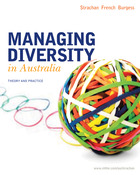
Authors: Glenda Strachan, Erica French, John Burgess

Managing Diversity in Australia is an important new title based on original research by leading scholars in the field. The book was specifically created to address the need for critical coverage of managing diversity and equity policies and programs in Australian organisations.
This new book covers the complex theoretical issues and provides practical examples of organisational practice. The work incorporates a range of clearly written Australian case studies into diversity issues.
Want to read this book? See is at: 658.3008 MAN 2009 or

Wednesday, 3 March 2010

Low-Paid Employment and Unemployment Dynamics in Australia (journal article)
By Hielke Buddelmeyer, Wang-Sheng Lee and Mark Wooden
from Economic Record Vol 86 Iss 272 2010, pp. 28 - 38
"This article uses longitudinal data from the Household, Income and Labour Dynamics in Australia (or HILDA) Survey to examine the extent to which the relatively high rates of transition from low-paid employment into unemployment are the result of disadvantageous personal characteristics or are instead a function of low-paid work itself. Dynamic random effects probit models of the likelihood of unemployment are estimated. After controlling for unobserved heterogeneity and initial conditions, we find that, relative to high-paid employment, low-paid employment is associated with a higher risk of unemployment, but this effect is only significant among women. We also find only weak evidence that low-paid employment is a conduit for repeat unemployment."


Labour Force Statistics 2009 [online]
Author: OECD

This annual edition of Labour Force Statistics provides detailed statistics on population, labour force, employment and unemployment, broken down by gender, as well as unemployment duration, employment status, employment by sector of activity and part-time employment. It also contains participation and unemployment rates by gender and detailed age groups as well as comparative tables for the main components of the labour force. Data are available for each OECD member country and for OECD-Total, Euro area and European Union. The time series presented in the publication cover 20 years for most countries. It also provides information on the sources and definitions used by member countries in the compilation of those statistics.

Tuesday, 23 February 2010


Author: Roy H. Lubit.

Many managers engage in destructive behavior that does considerable harm to their subordinates, their organization and eventually themselves. Whether they are narcissistic, unethical, rigid or aggressive, or simply depressed/anxious/burned out, working with them can be a nightmare. Moreover, they can do serious damage to their organizations by diverting energy from productive work, damaging cooperation and knowledge sharing, impairing retention of the best people, weakening morale, and making poor business decisions.

In Coping with Toxic Managers, psychiatrist and organizational consultant Dr. Roy Lubit shows you how to develop your emotional intelligence and protect yourself and your organization from the destructive impact of toxic managers.


Call number: 650.13 COP 2004

Monday, 22 February 2010


Editors: Janice Langan-Fox, Cary L. Cooper, & Richard J. Klimoski

"From personality disorders to wars over 'territory', this book chronicles and reveals the true nature of often hidden workplace problems including bullying, unethical behaviour, loss of trust, organizational deviance, cowardice, workaholism, negative humour and emotions, mismanagement, and malfunctioning performance and selection systems." - cover.
Call number: 658.3045 RES 2008

Friday, 29 January 2010


Effective recruitment and selection practices [book]

Authors: Alan Nankervis, Robert Compton & Bill Morrissey

"Provides practical guidance on the critical issues surrounding the areas of: policies & procedures; communication and liaison with line managers; internal recruitment; references and referees; entitlement to work in Australia. ... Incorporates changes in legislation, such as transition from Work Choices to Forward with Fairness, and includes changes and developments in practices due to technology, workplace trends and the current economic situation." - cover.

Friday, 22 January 2010


The Supervisor's survival guide : a practical guide to successful supervision [book]

Author: Kris Cole

A practical, concise guide with easy-to-implement ideas, tips and explanations, this book will assist the reader in attaining management and team leadership success.

Chapters include: Be a peak performer : personal skills for supervisors -- Manage your time and reduce your stress : making the most of the time available -- Develop winners : improving results through training -- Deal with the tough stuff : managing conflict and improving and appraising performance -- Deal with the headaches that surround every supervisor : planning, solving problems and making decisions.


Or find this book at: 658.302 SUP 2002

Tuesday, 19 January 2010


Edited by: Francesca Froy, Sylvain Giguère, Andrea Hofer/ OECD

Drawing from a wide array of case studies, this book analyses best-practice local strategies for increasing workforce skills. And it also takes a close look at the opportunities and challenges presented by international migration. The in-depth case studies in this report range from Shanghai's "Highland of Talent Strategy" to new "career ladders" which help immigrants escape low-skilled, low-paid employment in New York. National and local-level recommendations on local skills development are provided, for both OECD and non-OECD countries.

Monday, 18 January 2010


Author: Michael Schildberger / Business Essentials

Introduction -- Economic update -- Prepare now for the recovery -- Negotiating a better lease -- Do you deliver what you promise? -- Managing redundancy -- Young entrepreneur : on track for growth -- The big hurdle : leadership after you -- Sharemarket update -- Tax update -- Are you killing your co-workers?

Thursday, 14 January 2010


Author: Michael Stanford

"An invaluable (and laugh-out-loud funny) reference for anyone who works in an office, Inhuman Resources turns the spotlight on the toxic individuals in today’s workplace, providing insights into their childhood, character traits, their future demise/success, and most importantly how they spread their poison via office email." - cover.

Wednesday, 13 January 2010

Female power (journal article)
from The Economist, Vol 394 No 8663, 2/1/2010
"The article examines employment of women in developed countries. Working women compose approximately half of the U.S. labor force, and the number of women executives has increased dramatically. Social policies, particularly those relating to parenthood and child care, have not changed at the same pace, especially in the U.S."


Author: Tim Baker

"Instead of helping, most current human resource development approaches are hindering - and in doing so - damaging business in the current climate of accelerated change and uncertainty ... By using the roadmap outlined in this book, managers have at their disposal a unique methodology that shows how you can positively alter the culture of a workplace for the well-being of both parties in the employment relationship." - preface.

Wednesday, 6 January 2010


Author: Scott Ginsberg

"Offers principles and practices for getting employees to come to you! Inside learn phrases that payses, creating a question-friendly environment and growing bigger ears!" - from publisher.

Thursday, 24 December 2009

The effects of employment protection legislation and financial market imperfections on investment: evidence from a firm-level panel of EU countries (journal article)
By Federico Cingano, Marco Leonardi, Julián Messina and Giovanni Pica
from Economic Policy Vol 25 Iss 61 2009, pp. 117 - 163
"Exploiting information from a panel of European firms we study the joint effect of EPL and financial market imperfections on investment, capital-labour substitution, labour productivity and job reallocation. We find that EPL reduces investment per worker, capital per worker and value added per worker in high reallocation sectors relative to low reallocation sectors, while increasing the average frequency at which firms adjust their capital stock. The reduction in capital per worker and value added per worker is less pronounced in financially sound firms. Also, the propensity to invest appears to increase only in firms that are likely to be financially unconstrained. Overall, poor access to credit markets seems to exacerbate the negative effects of EPL on capital deepening and productivity."

Thursday, 10 December 2009


Authors: Kate Lister, Tom Harnish

Offers honest, real-world information on home-based jobs, businesses and careers that can change your life. It explains everything you need to know about how to simplify your life with a work-at-home job or business.

Tuesday, 8 December 2009


Authors: John Taylor & Adrian Furnham

"This book is about the cause, manifestations and consequences of individual infidelity to the employer. It is concerned with why employees become angry, disgruntled and spiteful towards their employer and how they attempt to seek to damage or take revenge for their feelings. ... It aims to help people identify and manage those who are likely to cause considerable damage to the organizations that they work for through theft, sabotage, fraud or a range of other counterproductive behaviours." - page 1.

Monday, 2 November 2009


Author: Patrick Lencioni

Uses a fable to look at the problem of "silos" in organisations. Silos can cause enormous problems in organisations - they waste resources, reduce productivity and cause disillusionment amongst employees. But there is a solution, leaders need to address the contextual issues at the heart of departmental separation and politics, and create shared “thematic” goals.