Brisbane's Top 50 Private Companies
by Matthew Ogg
from Brisbane Business News, September 2009
"WHILE the share market has been on the mend in recent months, the ASX's volatility over the past year has shown that private business does have its benefits. This month Brisbane Business News profiles the city's top private companies - the quietly confident high-achievers that pass under the radar, yet manage to cover so much ground."
Wednesday, 16 September 2009
Tuesday, 15 September 2009
Authors: Colin Barrow, Paul Barrow and Robert Brown
"Brings together the process and procedures required to produce that persuasive plan. The step-by-step approach covers all the key topics, including: Validating your business idea; Examples from the plans to successful entrepreneurs; Practical ways to research your market; Developing your marketing strategy; Raising finance; Building a website; Keeping the books; Controlling the business; Writing up and presenting your business plan; Links to free business spreadsheets and online tools." - cover.
Monday, 14 September 2009
The cooking-immigration nexus (journal article)
by Bob Birrell, Ernest Healy and Bob Kinnaird
from People and Place, v.17, no.1, 2009, pp. 63-75
"There has been a meteoric rise in enrolments of overseas students in cooking courses in Australia from around 1019 in 2004 to 8242 in 2008. All are trained in full-time courses conducted mainly by private providers, rather than by the apprenticeship system which is the norm for Australian-trained cooks. ... This article examines the rules governing the training and subsequent vasaing of these cooks. It concludes that there are serious gaps in the rules governing their training and the assessment of their competency. In large part because of these definciencies, only a minority obtain employment in Australia as trade-level cooks."
Writing for Results (article)
By Patricia Hoyle.
from Management Today September 2009
To keep misunderstandings in business to a minimum; clear, concise written communications are essential.
Total public sector output and productivity: presents latest estimates for public service productivity between 1998 and 2007 (article)
by Fraser Munroe, Mike Phelps
from Economic & Labour Market Review, vol 3, no 8, pp 45-55.
"Public services account for over 20 per cent of Gross Domestic Product (GDP). Almost everyone is a potential user of public services such as the NHS or schools. Taxpayers, as the main funders of public services, also have a legitimate concern about what we are getting for our money. One important aspect of this, though not the only aspect, is productivity: the quantity of output that is produced divided by the quantity of input used. The Office for National Statistics (ONS) has published periodic assessments of the productivity performance of key public services. This article presents estimates for all public services collectively for the first time since the 2003 ONS article Understanding Government Output and Productivity (Pritchard, 2003). "
Friday, 11 September 2009

Author: Paul Krugman
"Shows how today's situation parallels the events that caused the Great Depression. He surveys the economic crises that swept across Asia, Russia and Latin America in the 1990s, and reveals that those crises were a warning for all of us. Now depression economics has returned: when the great housing bubble of the mid-2000s burst, the Western financial system proved as vulnerable as those of developing countries caught up in earlier crises - and a replay of the 1930s seems all top possible. Krugman shows how it happened and lays out the steps that must be taken to turn around a world economy sliding into a deep recession. Brilliantly crafted in his trademark style - lucid, lively, and supremely informed - this will become a cornerstone of the debate over how to respond to our current economic predicament."

Warning : scammers are targetting you [Audio CD]
Author: Business Essentials
Contains the following segaments: Introduction -- The economy 2009/10 -- Warning : scammers are targetting you -- Winning ways to boost sales -- 12 hidden opportunities in a downturn -- Outsource your HR headaches -- Is now a good time to recruit? -- Cashflow : think outside the square -- Tax update -- Sharemarket update -- Storytelling to communicate your messages.
Grab a copy from the library!
Tuesday, 8 September 2009
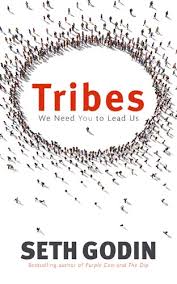
Author: Seth Godin
"Argues that today everyone has an opportunity to start a movement - to bring together a tribe of like-minded people and do amazing things. And yet too many people ignore the opportunity to lead because they are "sheepwalking" their way through their lives and work, too afraid to question whether their compliance is doing them - or their company - any good." - cover.
Thursday, 3 September 2009
Australian cultural and innovation policies: Never the twain shall meet? (journal article)
By Ben Eltham
from Innovation: Management Policy and Practice Vol 11 Iss 2 Aug 2009, pp. 230-239
"
In recent years, Australian cultural policy-makers have begun to pay more attention to innovation policy. Several of the Australian states specifically address issues of innovation in their formal cultural policies, and the Australia Council for the Arts has published an Innovation Strategy which purports to constitute 'a coordinated approach to supporting creativity as one of Australia's most valuable assets' (Australia Council 2006).
However, despite this prima facie policy commitment to supporting and fostering innovation in the arts and cultural industries, there remains a disconnect between cultural and innovation policies in Australia. On the one hand, cultural policies in Australia are confused and incoherent in their approach to cultural innovation, and many policy settings as they apply to cultural industries are antithetical to the aims of fostering innovation and R&D. Meanwhile, innovation policies continue to pay only marginal attention to the creative arts and cultural industries. This disconnect will be briefly examined in three fields of cultural policy: arts and cultural funding; copyright and intellectual property policy; and broadcast media policy.
It is argued that rather than promoting innovation, existing policy frameworks in all three areas, when not specifically framed around the protection of vested interests, are often contradictory and inimical to the disruptive influence of innovative artists, technologies and firms. Possible reasons for the disconnect include pragmatic matters of busy ministers and low policy priorities, and conceptual confusion over the status and value of culture."
Contact the Library to request a copy of this article.
The Private Finance Initiative (journal article)
By Anthony Wall and Ciaran Connolly
from Public Management Review Vol 11 Issue 5 Sept 2009, pp. 707 - 724
"This article considers the development of the Private Finance Initiative (PFI) and contends that it is now deeply embedded and intertwined in policies to renew and modernize the United Kingdom's public services. After briefly reviewing prior research based upon the themes proposed by Broadbent and Laughlin (1999), this article suggests a new research agenda to reflect how the PFI has matured and developed in recent years."
Government Subsidies for Professional Team Sports in Australia (journal article)
By John K. Wilson and Richard Pomfret
from Australian Economic Review Vol 42 Iss 3 2009, pp. 264 - 275
"Professional team sports represent an important aspect of Australian life. Interest is great, and a significant portion of household expenditure is directed toward sports-related goods and services. Based on international comparisons and on the size of attendance and television revenues, the sector should be highly profitable. Yet, significant amounts of public funding and regulatory exemptions are afforded to team sports in Australia. This article analyses the magnitude and reasons for government spending that subsidises professional team sports."
What Happened to Australia's Productivity Surge? (journal article)
By Ben Dolman
from Australian Economic Review Vol 42 Iss 3 2009, pp. 243 - 263
"Australia's productivity has grown 1 percentage point per year slower in the current decade than in the 1990s. This article shows that almost one-half of the slowdown is related to unusual developments in the mining industry, the effects of drought and the overstatement of productivity growth in the 1990s. Part of the remainder might be as a result of a combination of slower technological change, unmeasured declines in labour quality, the diminishing effects of past reforms and the increasing profitability of Australian firms."
Wednesday, 2 September 2009
Prolonged sitting linked to premature death (article)
by Angela Dorizas
from Government News, 27/08/2009
"Australian workers are risking their health through prolonged sitting, according to a landmark study. The Stand Up Australia study was a collaboration of Baker IDI Heart and Diabetes Institute, Medibank Private and the Cancer Prevention Research Centre at The University of Queensland. Using accelerometers and self-reporting, Stand Up Australia monitored activity levels of 131 Medibank Private and partner organisation employees in office, call centre and retail environments. The study found that on average 77 per cent of work time was spent sitting."
The New Marketing (journal article)
by Melissa Wilkinson
from Management Today September 2009
"In the glory days of mass consumption, marketing was about getting consumers to believe they didn't just want the latest and greatest product, they actually needed it. In a robust economy fuelled by excess and greed, consumers couldn't resist being swept up in the wave of campaigns promoting 'bigger, better, faster and newer'.
It was relatively easy for marketers to push products in an environment where consumers could afford to regularly replace and upgrade their goods. The job of marketing was to simply generate awareness and sell products; adding value to consumers was unimportant."
Tuesday, 1 September 2009

Author: Morten T. Hansen
"Deciding when to collaborate - and when not to - is the first critical step in disciplined collaboration. To master collaboration is to know when not to do it. ... Highlights common collaboration traps that managers must avoid. ... Also identifies four major barriers to successful collaboration - the "not-invented-here" syndrome, hoarding, search problems, and transfer issues - and show leaders how to spot them." - cover.
Monday, 31 August 2009
Doing Business in a Postgrowth Society (journal article)
By James Gustave Speth
from Harvard Business Review Vol 87 Issue 9 Sept 2009, pp. 18-19
"The author says that corporate leaders need to accept the concept of a postgrowth society in developed countries because the unlimited growth of the gross domestic product is untenable. The article mentions that pursuing a strategy of uncontrolled economic growth leads to consumerism that is artificially created by marketers and is fueled by advertising. The postgrowth society is characterized by environmental well-being, job security, advertising restrictions, stakeholder primacy in corporations, and government policies that establish social and economic equality, increase spending on public services, and control population growth."
State of the Arts and Innovation: Before and After the Review of the National Innovation System (journal article)
By Luke Jaaniste
from Australian Journal of Public Administration Vol 38 No 3 2009, pp. 272 - 287
"This article examines the relationship between the arts and national innovation policy in Australia, pivoting around the Venturous Australia report released in September 2008 as part of the Review of the National Innovation System (RNIS). This came at a time of optimism that the arts sector would be included in Australia's federal innovation policy. However, despite the report's broad vision for innovation and specific commentary on the arts, the more ambitious hopes of arts sector advocates remained unfulfilled. This article examines the entwining discourses of creativity and innovation which emerged globally and in Australia prior to the RNIS, before analysing Venturous Australia in terms of the arts and the ongoing science-and-technology bias to innovation policy. It ends by considering why sector-led policy research and lobbying has to date proved unsuccessful and then suggests what public policy development is now needed."
Friday, 28 August 2009
Compiled by Ken Davis and Mark Allsop
"Are you tired of costly and time-consuming business disputes? Are you frustrated that your hard earned revenue is slipping into the pockets of lawyers? ... Featuring valuable insights and case studies [this book] outlines the steps any business should follow to avoid slipping into the legal quagmire. The 7 habits are: alignment, commitment, mutual interest, communication, accountable and responsible, professional conduct, [and] pre-agreed dispute resolution." - cover.
Head First (journal article)
By Margery Weinstein
from Training Vol 46 Iss 6 Jul/Aug2009, pp. 6-6
"The mishaps that occurred at your company lately may make you wonder, but it turns out your learners (including those who can't remember what time work begins each day) have brains. All you, as a trainer, have to figure out is how to tap into them."
Intuition in Organizations: Implications for Strategic Management (journal article)
By Gerard P. Hodgkinson et al.
From Long Range Planning Vol 42 Iss 3 2009, pp. 277-297
"Recent advances in social cognitive neuroscience and related fields have rejuvenated scholarly research into intuition. This article considers the implications of these developments for understanding managerial and organizational decision making. Over the past two decades, researchers have made considerable progress in distinguishing intuition from closely-related constructs such as instinct and insight and the interplay between these non-conscious forms of cognition and explicit reasoning processes is now better understood. In the wake of significant theoretical and methodological convergence centred on dual-process theories of reasoning, judgment and social cognition, supported by functional magnetic resonance imaging (fMRI) studies, several of the foundational assumptions underpinning classic theories and frameworks in strategic management and entrepreneurship research are being called into question. Old models based on a simplistic left brain/right brain dichotomy are giving way to more sophisticated conceptions, in which intuitive and analytical approaches to decision making are underpinned by complex neuropsychological systems. In the light of these advances, the authors offer their reflections on what this all means for the assessment, development and management of intuition in the workplace."
Contact the Library for a copy of this article.
Subscribe to:
Posts (Atom)
